

How to Find a Wooden Shop Near Me: A Buyer’s Guide
Table of Contents
- What to Look for in a Wooden Shop Near Me
- How to Choose a Wood Furniture Store That Matches Your Needs
- Solid Wood Furniture Stores: How to Spot Authentic Quality
- Finding Custom Wood Furniture Near Me
- Live Edge Furniture Near Me: What Sets It Apart
- Before You Visit: Preparation Steps That Matter
- Measure Your Space and Gather Style References
- Call Ahead: Verify Inventory, Services, and Availability
- Verify Accessibility and Parking
- Prepare Questions About Materials and Construction
- Check Policies on Returns, Damage, and Shipping
- Check Online Presence and Reviews Before Arriving
- Request References for Custom Work
- Evaluating Local Shops: Ratings, Reviews, and Authenticity
- Frequently Asked Questions
Last Updated: October 11, 2026
What to Look for in a Wooden Shop Near Me
Finding the right wooden shop near me depends on understanding what matters most to your space. Some specialize in mass-produced furniture; others focus on handcrafted, heirloom-quality pieces. The difference comes down to materials, craftsmanship, and wood sourcing.
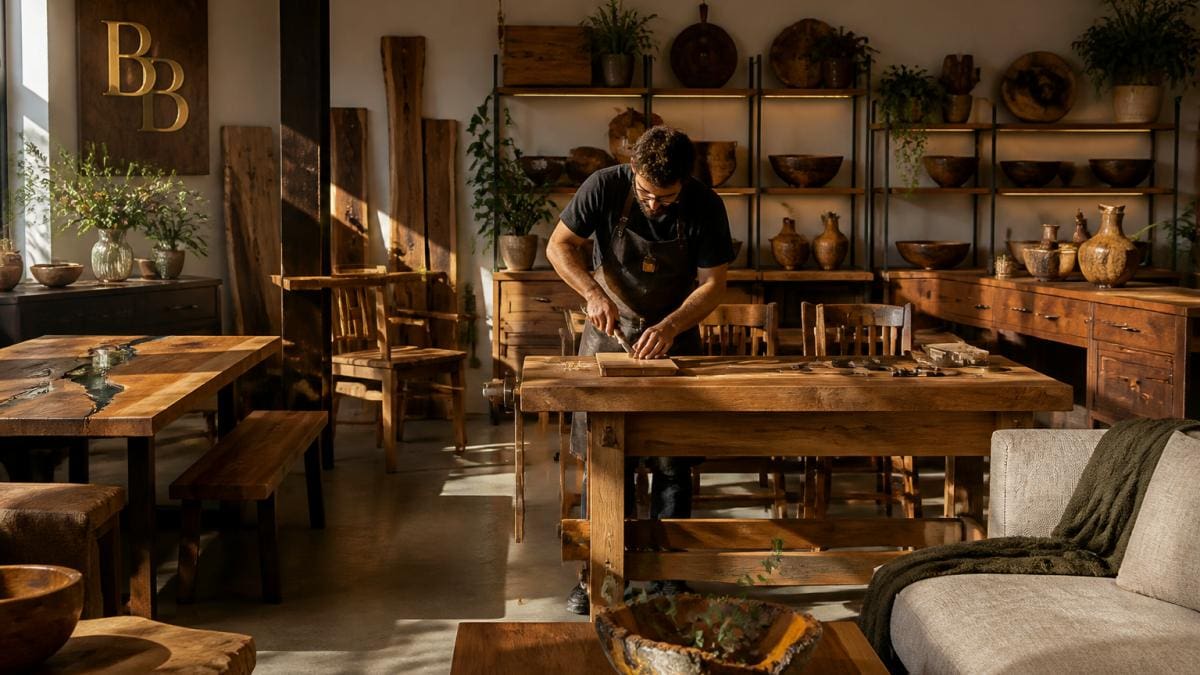
Look for shops that clearly explain their sourcing practices and can identify wood species and explain why it matters for your climate. These details separate shops that understand wood from those that simply move inventory.
How to Choose a Wood Furniture Store That Matches Your Needs
Assess the Shop’s Specialization
Before visiting, narrow down what type of wooden shop near me serves your needs. Some focus on dining tables and bedroom sets; others specialize in live edge slabs or custom pieces.
If you want custom work, look for shops with a design portfolio. If you need something ready to take home, focus on shops with inventory on hand. Most excel at one or the other.
Ask: Do they build custom pieces or work from existing designs? How long does a custom order take? Can they show examples of previous work?
Verify Craftsmanship and Materials
Solid wood furniture stores should answer questions about construction: Are drawers built with dovetail joints or simple butt joints? Is the frame hardwood or softwood? What finish was used?
True solid wood means visible surfaces are actual wood, not veneer. This matters because solid wood can be refinished and repaired; veneer cannot. A reputable wooden shop near me will distinguish between the two.
Feel for smooth finishes, tight joints, and solid construction. A quality wood furniture store will invite this inspection.
Solid Wood Furniture Stores: How to Spot Authentic Quality
Solid wood furniture stores that emphasize authenticity must be able to answer specific questions about wood species, grading, and sourcing, details most competitors gloss over. Understanding these distinctions separates shops that truly know their materials from those using “solid wood” as a marketing term.
Wood Species and Suitability
Reputable solid wood furniture stores explain why they chose specific species. Hardwoods like oak, maple, cherry, and walnut have different characteristics: oak is durable with prominent grain; maple is dense and pale; cherry darkens over time; walnut offers rich color and stability. Softwoods like pine are less durable.
Ask: “What species is this made from, and why?” A vague answer is a red flag. Quality shops explain grain patterns, hardness ratings, and how the wood will age in your climate.
Wood Grading and Moisture Content
The National Hardwood Lumber Association (NHLA) grades hardwood lumber by appearance defects: FAS is the highest grade with minimal knots; Select grade allows some defects; Common grades include more knots. Solid wood furniture stores should specify which grade they use. Ask directly if they don’t volunteer this information.
Moisture content matters enormously. Lumber should be kiln-dried to 6-8% for interior furniture. Ask: “What’s the moisture content of your lumber, and how is it dried?” Shops with moisture meters and documented drying processes take this seriously.
Sourcing and Sustainability
Look for certifications from the Forest Stewardship Council (FSC) or Sustainable Forestry Initiative (SFI). However, certification adds cost, so not all quality shops carry certified wood, some source from local mills with transparent practices instead.
Ask: “Where does this wood come from?” Shops with deep supplier relationships know their mills by name. Shops sourcing from large distributors may lack this detail. A solid wood furniture store that can trace its materials is more likely to stand behind quality.
Construction Details That Signal Quality
Examine how pieces are built. Drawers should use dovetail or mortise-and-tenon joinery, not butt joints. Table aprons should be solid wood, not plywood. Legs should be mortised into the frame, not screwed on. These details determine whether a piece lasts 10 years or 50.
Feel for gaps in joints. Ask to see the underside of pieces, that’s where shops cut corners or invest in craftsmanship.
Finish and Maintenance
Quality shops offer multiple finish options. Oil finishes highlight grain but require maintenance. Lacquer and polyurethane provide more protection. Water-based finishes are low-VOC but may not age as gracefully.
Ask about finish durability and maintenance. Can it be refinished if damaged? Shops discussing finish trade-offs are thinking about long-term ownership.
Finding Custom Wood Furniture Near Me
Questions to Ask Before Ordering Custom Pieces
Custom wood furniture near me requires a different approach than buying off-the-shelf. Before committing to an order, clarify these points with the shop:
What is included in the design consultation? Some shops charge for initial design work; others include it. Understand the cost structure upfront. How many revision rounds are included in the price? What happens if you want changes halfway through? A good custom wood furniture shop will outline this clearly.
Ask about material sourcing and alternatives if your preferred wood is unavailable.
Request a timeline in writing. Ask about payment terms, deposit upfront or staged payments?
Understanding Timelines and Revisions
Most custom work takes 8 to 16 weeks. A wooden shop near me quoting significantly faster may be cutting corners. Understand what counts as a revision and what the shop charges for changes. Get this in writing.
Live Edge Furniture Near Me: What Sets It Apart
Live edge furniture near me features the natural outer edge of the wood slab, left unfinished. A wooden shop near me specializing in live edge must understand wood movement, live edge pieces are vulnerable to splitting or cracking if not properly sealed and supported. Ask how long the wood is dried before construction; reputable shops have specific answers. These pieces may need occasional resealing and care.
Before You Visit: Preparation Steps That Matter
Visiting a wooden shop near me is most productive when you arrive prepared with measurements, style references, and a clear understanding of what the shop offers. But preparation goes beyond aesthetics, it includes verifying the shop can actually deliver what you need.
Measure Your Space and Gather Style References
Before visiting, measure doorways, hallways, and the room where furniture will live. Measure the space where the piece will sit and note ceiling height and architectural constraints.
Shop Exclusive Winter Collection →
Create a visual reference folder with images of styles you love. When you visit a wooden shop near me, you’ll have concrete examples to discuss with staff.
Know your budget range.
Call Ahead: Verify Inventory, Services, and Availability
Call or email before visiting. Ask if they carry the specific item you’re seeking and whether they have pieces in stock or work primarily on custom orders.
Clarify what services the shop provides: design consultation, modifications, finishing, repairs, or restoration.
If interested in custom pieces, ask about current lead times. Confirm the shop can meet your deadline before visiting.
Delivery and Installation: Ask whether the shop offers delivery and installation. Do they charge extra? Do they handle assembly, or is that your responsibility? For large pieces, understanding delivery logistics before visiting prevents surprises at checkout.
Verify Accessibility and Parking
If you have mobility considerations, call ahead to confirm the shop is accessible. Ask about:
- Parking availability and proximity to the entrance
- Whether the showroom is on one level or requires stairs
- Restroom availability
- Whether staff can assist with mobility needs
Prepare Questions About Materials and Construction
Bring a written list of questions about wood species, grading, sourcing, joinery, and finishes (see the “Solid Wood Furniture Stores” section for specifics). Shops that can answer these questions confidently are worth your time. Shops that seem annoyed by detailed questions may not prioritize quality or transparency.
If you’re considering custom work, prepare questions about the design process: How many revision rounds are included? What happens if you want changes mid-production? How are payment terms structured (deposit upfront, staged payments, final payment on delivery)? Get answers in writing before committing.
Check Policies on Returns, Damage, and Shipping
Before visiting, research the shop’s policies on the website or by calling. Understand:
Return Policy: Can you return a piece if it doesn’t work in your space? Some shops offer no returns on custom work; others allow returns within 30 days if the piece is undamaged. Get this in writing.
Damage Claims: If a piece arrives damaged during shipping, what’s the shop’s process for filing a claim? Who covers the cost of replacement or repair? Quality wooden shops carry insurance and have clear damage protocols.
Shipping and Packaging: Ask how the shop packages furniture for delivery. Do they use protective materials like blankets, foam, or custom crating? Casual packaging is a red flag about overall quality standards. For high-value pieces, ask if they use white-glove delivery services.
Check Online Presence and Reviews Before Arriving
Read customer reviews on Google, Yelp, and the shop’s website. Look for specific feedback about quality, customer service, and follow-through on timelines. Vague praise (“Great shop!”) is less useful than detailed reviews describing actual experiences.
Pay attention to how the shop responds to negative reviews. Do they address concerns professionally? Do they try to make things right?
Check how long the shop has been in business. Longevity matters in furniture retail. A wooden shop near me that’s been operating for 10+ years has survived market changes and built lasting customer relationships.
Request References for Custom Work
If you’re ordering a custom piece, ask the shop for references from past customers. A reputable wooden shop near me will happily connect you with someone who’s commissioned a piece from them. Speaking directly with a past customer about their experience, timeline, communication, final quality, and satisfaction, is invaluable and often reveals details the shop won’t volunteer.
Evaluating Local Shops: Ratings, Reviews, and Authenticity
Customer reviews tell you a lot about a wooden shop near me, but read them carefully. Look for specific feedback about quality, customer service, and follow-through on timelines.
Pay attention to how the shop responds to negative reviews. Do they address concerns professionally? Do they try to make things right?
Check how long the shop has been in business. Longevity matters in furniture retail.
Ask for references if you’re ordering custom work. A reputable wooden shop near me will happily connect you with past customers.
Finding the right wooden shop near me requires research, clear communication, and realistic expectations. When you’re ready to explore wooden furniture that brings warmth and authenticity to your space, visit The Bronze Burl to discover handcrafted pieces built with the care and attention your home deserves.
Frequently Asked Questions
How do I find a wooden shop near me that specializes in what I need?
Start by searching for local wood furniture stores, woodworking shops, and custom furniture makers in your area. Check Google Maps, local business directories, and community recommendations. Visit shop websites to see their product focus, some specialize in custom pieces, others in ready-made furniture, and many offer both. Read customer reviews to confirm they carry the style and quality you’re seeking. Many shops also maintain social media pages showcasing their work, which helps you evaluate their craftsmanship before visiting.
What questions should I ask before ordering custom wood furniture?
Ask about wood sourcing, construction methods, and warranty coverage. Inquire about the timeline from order to delivery, whether design revisions are included, and what happens if you’re unhappy with the piece. Confirm shipping costs and damage liability. Ask to see examples of past work and customer testimonials. Request a detailed quote that breaks down materials, labor, and finishing. Understanding these details upfront prevents surprises and ensures you’re investing in a piece built to last.
How can I tell if furniture is made from solid wood?
Solid wood furniture should show wood grain on all visible surfaces, including the back and underside. Inspect joints for solid connections, look for mortise-and-tenon or dovetail joinery rather than just nails or staples. Ask the shop directly about their materials; reputable stores are transparent about whether pieces are solid wood, veneer, or composite. Check for consistency in wood species and finish. Solid wood furniture typically costs more than alternatives but lasts decades when properly cared for, making it a worthwhile investment.
What makes live edge furniture special, and how do I find it locally?
Live edge furniture features the natural, unfinished edge of the wood slab, preserving the tree’s organic shape and bark. This style brings raw, authentic character to a space. To find live edge pieces, search for local woodworking shops, artisanal furniture makers, and custom woodworkers in your area. Many handcrafted furniture stores specialize in live edge tables, shelves, and countertops. Visit shops in person to see how the natural edges and wood grain patterns look in different lighting. Ask about wood species, finish options, and how edges are treated for durability.